Buying Guide·Cooling Bedding
Best Cooling Blankets for Hot Sleepers
A plain-English guide to the fabrics, weaves and weights that help hot sleepers stay comfortable — and the marketing claims worth ignoring.
By DecoraMint Editors··1 min read
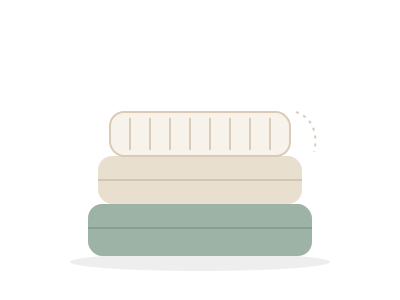
If you regularly wake up too warm, your bedding is one of the easiest things to change. A “cooling” blanket can’t lower your body temperature on its own, but the right materials let heat and moisture escape instead of trapping them.
What makes a blanket feel cool
Three things matter most:
- Breathability — how easily air moves through the fabric.
- Moisture management — how well the fabric absorbs and releases sweat.
- Weight — lighter layers trap less heat and are easier to adjust through the night.
Fabrics to look for
- Cotton (percale or waffle weave): breathable, durable and easy to wash. Percale has a crisp, matte feel; waffle weave adds texture while staying airy.
- Linen: very breathable and gets softer with every wash. It wrinkles easily, which some people love and others don’t.
- Bamboo-derived viscose or lyocell: smooth, cool to the touch and good at wicking moisture. Check care labels, as some need gentler washing.
- Lightweight wool: surprisingly good at regulating temperature, though it is pricier and not for everyone.
Fabrics to approach with caution include heavy polyester fleece and thick microfiber, which tend to hold heat.
Weave and weight
Open weaves such as waffle, gauze and cellular knits let air circulate. If a listing gives fabric weight in GSM (grams per square meter), lower numbers generally mean lighter, cooler layers.
Be skeptical of big claims
Phrases like “instant cooling” or “drops your temperature by X degrees” are marketing language. Focus on fiber content, weave and weight — the specifications that actually explain how a blanket will perform.
Layer instead of committing
For many hot sleepers, the most comfortable setup is a breathable sheet plus one or two light layers that can be kicked off, rather than a single heavy comforter.
The bottom line
Choose natural or moisture-wicking fibers, an open weave and a lighter weight. Then check the care label to make sure it fits your laundry routine.