Buying Guide·Floor Seating
Best Floor Mattresses
What to know before buying a floor mattress or futon for guests, kids’ rooms or minimalist sleeping — thickness, materials, airflow and care.
By DecoraMint Editors··1 min read
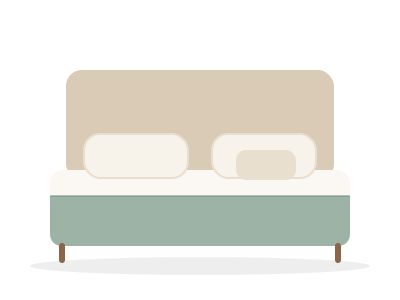
Floor mattresses — including Japanese-style shikibutons, tri-fold foam mattresses and modern floor futons — are a flexible option for guest rooms, kids’ rooms, small apartments and anyone who prefers sleeping low.
Thickness and support
Thickness is the biggest factor in comfort. Thin mattresses (2–3 inches) feel firm and fold easily; thicker options (4–6 inches) feel more like a conventional mattress but are bulkier to store. Side sleepers usually prefer a thicker, softer surface; back and stomach sleepers often do well on firmer, thinner styles.
Fill materials
- Cotton batting: traditional, breathable and firm; compresses over time and benefits from regular airing.
- Foam: consistent support and easy to fold; density matters more than thickness for durability.
- Latex: springy and durable, with good airflow, though usually more expensive.
- Wool layers: help regulate temperature and moisture.
Airflow and moisture
Because a floor mattress sits directly on the floor, moisture can build up underneath. Air it out regularly, fold it away during the day if possible, and consider a slatted base or breathable mat underneath.
Covers and care
A removable, washable cover makes floor mattresses far easier to maintain. Check whether the inner core can be spot-cleaned, and whether the mattress can be rotated or flipped.
Storage
If the mattress will double as guest bedding, check its folded dimensions against your closet, and look for one with a carry handle or storage bag.
The bottom line
Choose thickness based on how you sleep and how often you’ll use it, favor breathable materials, and plan for airflow underneath.